

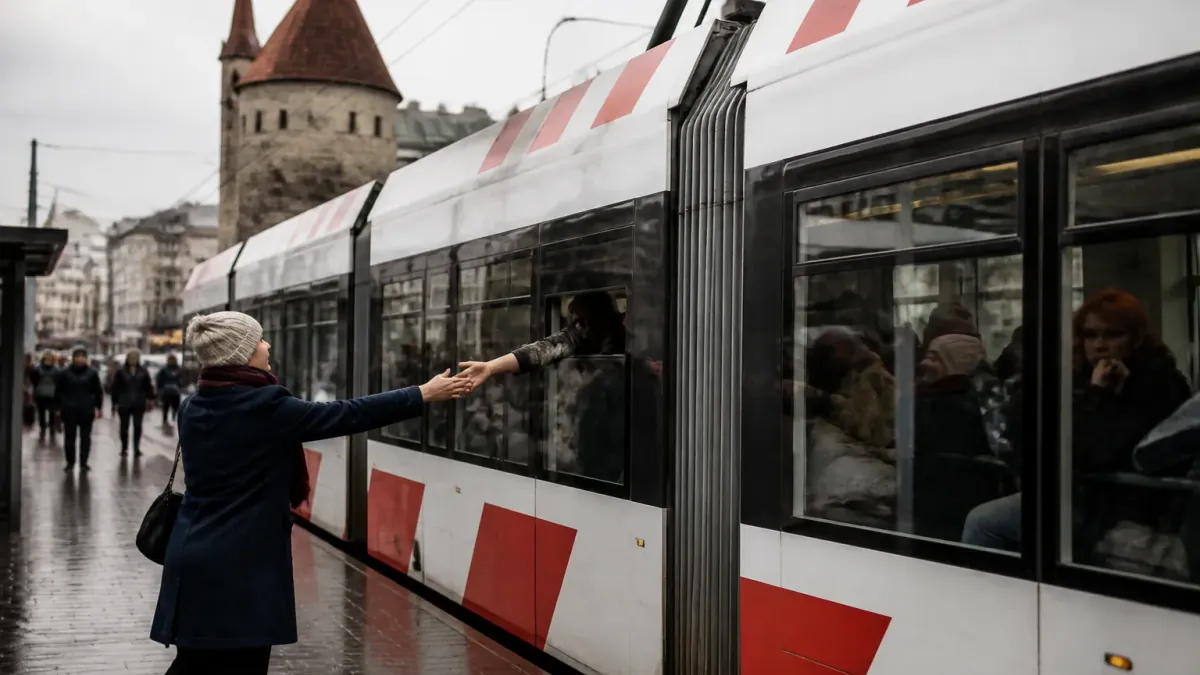
TALLINN — In an unexpected twist, the Tallinn public transport authority announced that trams will now operate based solely on the emotional state of their drivers rather than traditional timetables.
Authorities claim this revolutionary approach aims to promote mental health and reduce stress among tram drivers. “Why follow a schedule when your feelings matter more?” asked Marta, a spokesperson for the new initiative, while sipping her morning kohv.
The new tram service promises to be “the most human tram experience” possible. If drivers feel cheerful, the trams will glide through the city like a violin solo. If drivers feel gloomy, riders can expect an occasionally moody, ponderous ride, reminiscent of the grey Estonian winter.
”We want people to feel connected, not just get from A to B,” said Marta, then awkwardly left to check on driver Liisa, who was reportedly dealing with a parachute malfunction during her last skydiving adventure.
Commuters are divided on this change. Jüri, a frequent tram user, stated, “I prefer knowing when I’ll get to work. But if Maria, the driver, feels extra happy today, maybe she’ll let us experience a spontaneous detour through the Old Town!”
Some passengers are embracing the potential for existential tram rides, seeking out deeper meaning in their mundane commutes. “This is the soul of Estonian transport,” said Mart, an e-Resident who feels very strongly about this new approach while clutching his leib sandwich.
Others are less enthusiastic. “I just want to know when to leave home, not how my driver feels about life,” complained Reet, as she watched her tram disappear in the distance, already late for work.
The first week of this emotional tram system was marked by delays and a hiccup with one tram reportedly halting to discuss the nature of happiness with its passengers. “They should have just stuck with the old system,” said Tiit, who remained unimpressed.
At press time, tram drivers were overheard forming a support group to deal with the overwhelming feelings of pressure from the expectations of their passengers.