
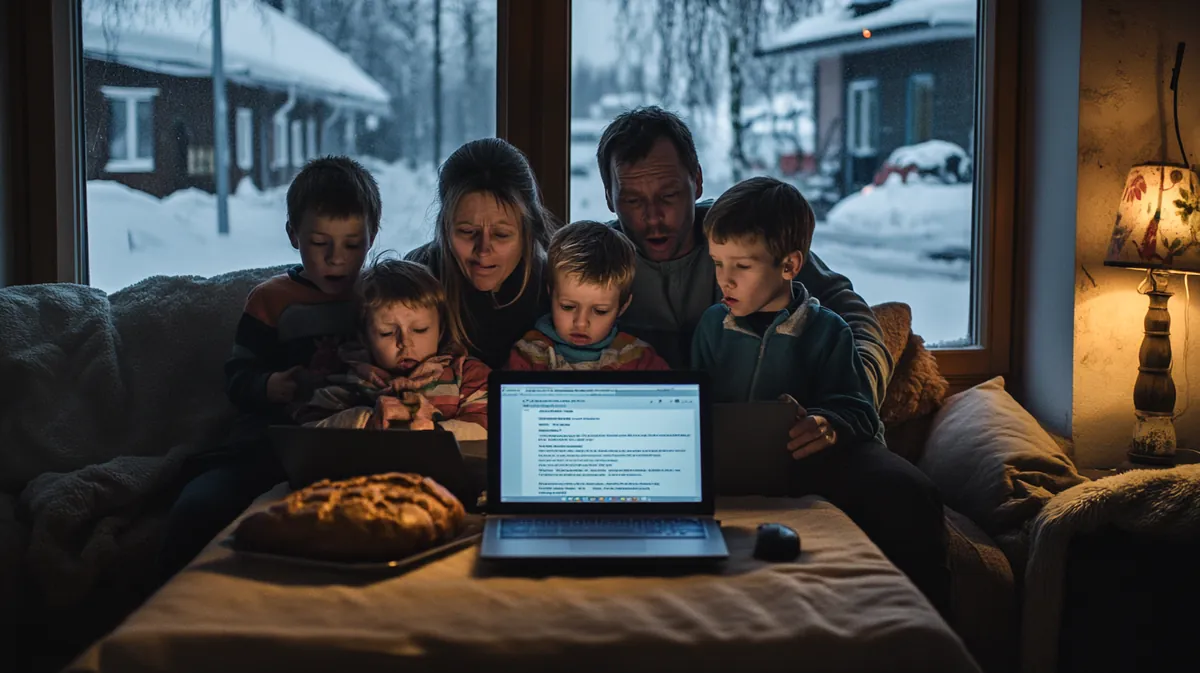
TALLINN — Karl and Liisa took their three kids on what they thought would be a normal family outing: accessing their e-Estonia account on the GovCloud website. What they faced instead was an unforeseen digital blockage that sparked profound discussions about life, identity, and what it even means to exist in a world where cookies are disabled.
”We just wanted to check the family tax info, and suddenly, we’re all asking if me not being able to access this site is a statement on my worth as a person,” said Karl, clearly rattled by the experience. “I mean, if I can’t even get a cookie, what does that say about my life?”
Little Anu, the youngest, let out a dramatic sigh. “I thought cookies were supposed to be sweet, not blocky!” she exclaimed, as her siblings nodded in solemnity.
Philosophical Implications of a Blocked IP
Upon receiving the now-famous message, ‘You have been blocked,’ the family found themselves trapped in a de facto existential seminar. “It felt like we were in a sauna without a stove—just sitting there, sweating our confusion out,” commented teenage son Mart, rolling his eyes. “You can’t just block a family trying to navigate the complexities of e-government while we have a litany of existential crises brewing.”
“It’s like the universe doesn’t want us to exist in the digital realm.”
Friends and neighbors were contacted to assist with a remote troubleshooting session. However, the only piece of advice they received was to take a deep breath and re-evaluate their life choices. Aivo, the tech-savvy neighbor, recommended using a VPN, but instead left the family wondering if a virtual private network could help mend their spiritual disconnect.
At press time, the family was still debating whether the inability to access GovCloud was a more significant barrier than their communication habits. As Liisa wisely concluded, “Maybe our cookies don’t crumble, but instead define who we really are.”